
Title fraud remains one of the biggest fears for property buyers in Kenya, and for good reason. Every year, investors lose millions to forged documents, double-sold parcels, and properties with hidden encumbrances that only surface after money has changed hands.
The good news is that title verification in Kenya is a solvable problem. The process is straightforward when done properly, and it eliminates the vast majority of risk before you commit capital. The bad news is that most buyers skip steps, rush the process, or trust the wrong people to handle it.
Here’s exactly how to protect yourself.

Step one: conduct an official land search
Every title verification starts at the Land Registry. An official land search confirms whether the person selling you the property actually owns it. It sounds basic, but you’d be shocked how many transactions proceed without this step.
The search reveals the registered owner’s name, the size of the parcel, any registered charges or mortgages against the property, caveats or restrictions on transfer, and whether the title is freehold or leasehold. If it’s leasehold, you’ll see the remaining lease period, which directly impacts the property’s value.
The process costs a few thousand shillings and takes 1-3 days. There is no legitimate reason to skip it. If a seller pressures you to move quickly without allowing a land search, that’s your signal to walk away immediately.
Step two: verify the physical title deed
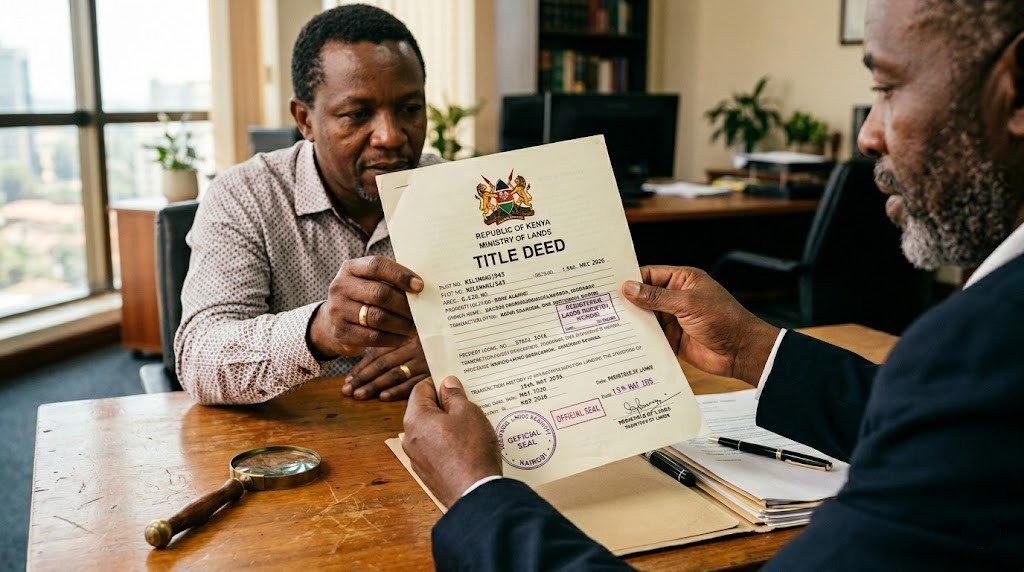
A land search confirms the registry records, but you also need to verify the physical title deed the seller is presenting. Forged title deeds are a real problem in Kenya, and sophisticated forgeries can fool untrained eyes.
An experienced property lawyer will check security features on the document, verify that the details match registry records exactly, confirm the seller’s identity against the registered owner, and flag any inconsistencies in dates, signatures, or parcel numbers.
Digital title deeds, which Kenya has been rolling out, add an additional layer of security. But many properties still operate on older physical titles, making manual verification essential.
Step three: check for encumbrances and disputes
A clean title search doesn’t always mean a clean property. There are encumbrances and disputes that don’t always appear on the registry, particularly in areas with historical land disputes or informal settlements nearby.
Your lawyer should investigate whether any court cases involve the property or the parcel number, whether there are unpaid land rates or utility bills that could become your liability, whether the property sits on land with any government acquisition notices, and whether neighboring properties have boundary disputes that could affect your parcel.
This deeper investigation takes more time but catches problems that a standard search misses. Properties in certain areas of Nairobi, Kiambu, and coastal regions carry higher dispute risk and warrant extra caution.
Step four: verify the seller's identity and authority
Confirm that the person signing the sale agreement is actually authorized to sell. This means verifying their national ID or passport against the registered owner’s details. If they’re selling on behalf of someone else, you need a properly executed power of attorney.
For company-owned properties, verify the company registration, confirm the directors authorized to sign, and check that the board resolution approving the sale is genuine. For properties owned by deceased persons, confirm that succession has been properly administered through the courts.
Identity fraud in Kenyan property transactions is more common than most buyers realize. A competent lawyer catches these issues before they become your problem.
Step five: physically inspect the property
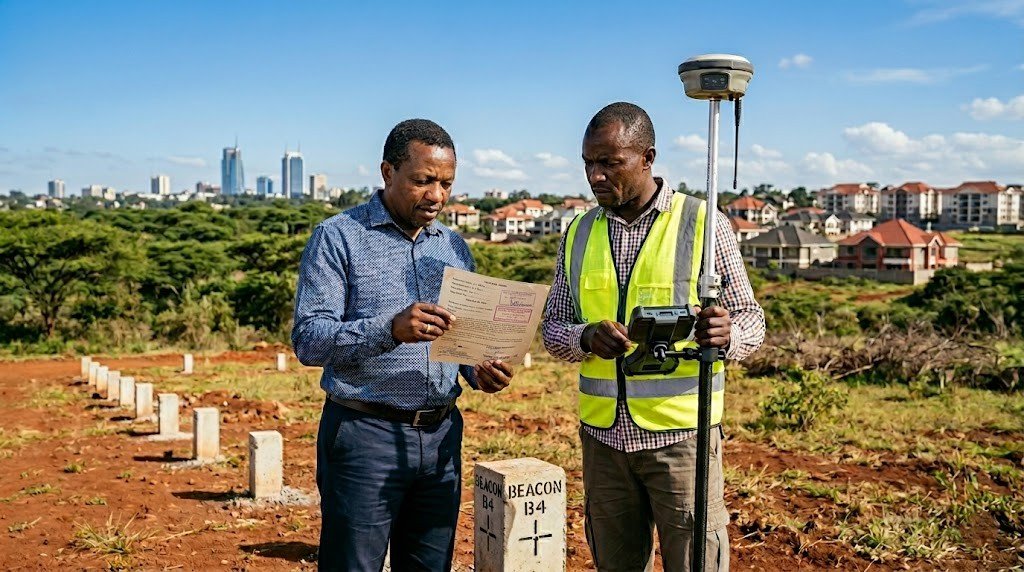
Documents can be perfect on paper while the physical reality tells a different story. Visit the property. Confirm that what’s described in the documents matches what exists on the ground. Check boundaries, access roads, neighboring developments, and the general condition of the area.
For diaspora investors who can’t visit in person, a trusted representative on the ground, ideally your property advisor or lawyer, should conduct this inspection and provide detailed photographic and video documentation. Never purchase property in Kenya sight unseen, even with clean paperwork.
Common mistakes that cost investors money
Trusting the seller’s lawyer to handle your due diligence. The seller’s lawyer represents the seller’s interests, not yours. Always engage your own independent lawyer.
Paying before completing due diligence. Deposits are normal, but full payment before title verification is reckless. Structure your agreement to protect your deposit if due diligence reveals problems.
Relying on a relative’s recommendation instead of professional verification. Family relationships and property transactions are a volatile mix. Professional due diligence protects both your money and your relationships.
Assuming a “good deal” means a safe deal. Below-market pricing is often a red flag, not an opportunity. Properties priced significantly below comparable sales usually have undisclosed problems.
How BROADEVER protects your investment
Title verification is built into every transaction we manage. Our legal partners conduct comprehensive due diligence on every property before it enters our portfolio, and again before any client commits capital. Land searches, title deed verification, encumbrance checks, seller identity confirmation, and physical inspections are standard, not optional.
For diaspora investors purchasing remotely, we provide full documentation at every stage so you have complete visibility into the verification process. No shortcuts. No assumptions. No surprises after payment.
Schedule a consultation: broadever.com/contact
Call or WhatsApp: +254 758 212858
Email: sales@broadever.com
Visit us: 9 West, Westlands, Nairobi